The LIFE Prognoses project in its context
Forests for Europe
Scientific literature consistently highlights that primary and old-growth forests in Europe, although covering only a very limited area, are irreplaceable. They safeguard exceptional biological diversity, stabilize terrestrial carbon storage, regulate hydrological regimes, support ecosystem adaptation to disturbances, and provide essential public health benefits.
The European Biodiversity Strategy 2030 underscores the crucial role of forest habitats in maintaining biodiversity and in removing carbon from the atmosphere, transforming CO2 into biomass, and creating significant carbon sinks. The strategy calls for the urgent definition, mapping, monitoring, and strict protection of all remaining primary and old-growth forests in the EU.
The LIFE Prognoses project contributed significantly to advancing these objectives and to supporting the successful implementation of the 2030 agenda.

Challenges addressed by LIFE Prognoses
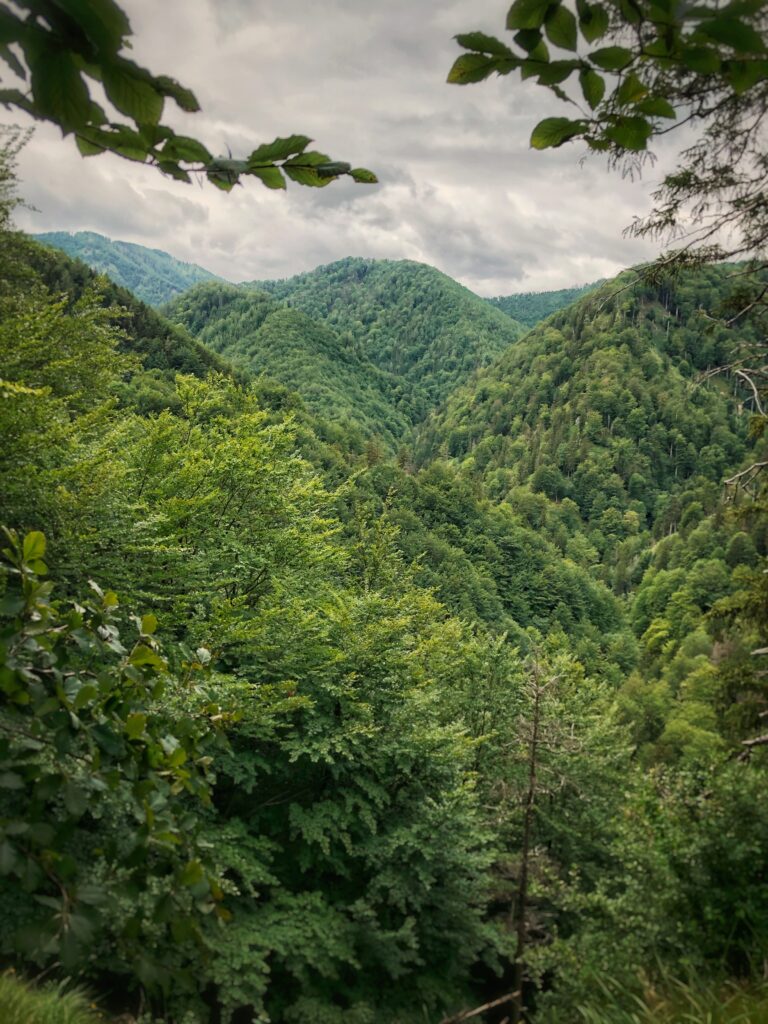
Although old-growth forests are scarce and important, not all of them are protected from logging and other human interventions; however, the EU is taking steps to address this issue.
Back in 2021, a European-wide standard to assess the status of naturalness of a forest did not exist. There was no set of broadly acknowledged indicators and thresholds between the forest sector and nature conservation across Europe. Since there was no consistent set of indicators, the identification methods were inconsistent across Europe.
To support the envisaged protected status, the partners of the LIFE Prognoses project quantified the added value of the characteristic ecosystem services of primary and old-growth forests, as compared to managed forests and contributed to the development of identification criteria and mapping methods for European old-growth forests, focusing specifically on beech forest ecosystems.
Moreover, the project partners developed ambitious and creative awareness-raising strategies to build capacity with a large variety of target groups. The awareness-raising activities were immediately tested and implemented in national parks across Europe.
Challenges for the coming years
Many European old-growth forests remain unidentified, unmapped, and unprotected.
In 2021, the Joint Research Committee of the European Commission published a compilation of existing mapping of European primary and old-growth forests, named the European Primary Forest Database (EPFD 2.0; Sabatini et al. 2021). The EPFD 2.0 represents a European-wide effort, compiling data from 48 different field-based datasets of primary forests. It contains more than 18.000 patches, representing 3,7 million hectares, across 33 European countries. Still, a large portion of the area estimated to be covered with old-growth forest remains unmapped. In total, this ‘mapping deficit’ consists of about 4,4 million hectares. The protection status of these unmapped forests is unknown, which poses a major threat to their conservation.
LIFE Prognoses developed identification and mapping methods for European old-growth forests. Moreover, LIFE Prognoses placed the focus of a wide variety of stakeholders back on the importance of these forests. The project’s efforts provide the tools for a feasible and effective mapping process across Europe. Now, what remains is the employment of the developed tools. There remains an urgent need for old-growth identification and mapping in Europe.
Network
The project built on the UNESCO World Heritage site of ancient and primeval beech forest, and enjoyed the benefits of the established network and its strong engagement with landowners, local communities, and authorities to conserve ancient forests and integrate them in local sustainable development strategies. In general, the Natural World Heritage sites in EU-Countries overlap with Natura 2000 sites.
Official context
The project contributed to the implementation of the EU Biodiversity Strategy to 2030, to the achievement of the objectives and ambition of the European Green Deal on forest protection and to the better implementation of the Habitats and Birds Directives. All activities took the existing European policy and legal framework applicable to primary and old growth forests into account.

Recognition
The positive attitude towards the Natural World Heritage and the strictly protected forest ecosystems was seized to strengthen the protection and recognition of old-growth forests in Europe